This page is a draft and may contain incorrect information and/or experimental styling.
Red Skelton (1913–1997)
Table of Contents
Richard Bernard "Red" Skelton (July 18, 1913 – September 17, 1997) was one of America's most beloved entertainers, achieving lasting fame as a comedian, actor, writer, mime, and later as a prolific painter. Best known for The Red Skelton Show, which aired on network television from 1951 to 1971, Skelton created an unforgettable cast of recurring characters whose warmth, innocence, and humor endeared him to generations of viewers.
Today, Red Skelton remains an important figure in several collecting fields, including television memorabilia, signed photographs, original artwork, advertising, promotional material, recordings, and personal memorabilia. His paintings—created largely during the latter portion of his life—have become a distinct collecting specialty in their own right.
Born in Vincennes, Indiana, Red Skelton began performing while still a child after the death of his father. Working in medicine shows, vaudeville, circuses, and theatrical productions, he developed the physical comedy and improvisational skills that would define his career.
His success on radio during the 1930s and 1940s led naturally to film appearances and eventually to one of television's longest-running variety programs.
Premiering nationally in 1951, The Red Skelton Show became one of the most successful comedy programs in American television history. For two decades Skelton entertained audiences through sketches, pantomime, musical performances, guest stars, and an evolving gallery of comic characters.
Unlike many comedians whose material depended upon current events, Skelton's humor centered upon recognizable human personalities. His characters were affectionate rather than satirical, allowing the program to enjoy extraordinary longevity and enduring popularity.
Among his best-known characters were:
* Clem Kadiddlehopper
* Freddie the Freeloader
* Junior, the Mean Widdle Kid
* George Appleby
* Sheriff Deadeye
* San Fernando Red
* Gertrude and Heathcliffe
Original scripts, production stills, publicity photographs, and promotional materials featuring these characters remain highly collectible.
Perhaps Skelton's most recognizable rural character, Clem Kadiddlehopper embodied the good-hearted but naïve country cousin whose innocent misunderstandings produced much of the comedy.
Introduced during Skelton's television years, Clem became one of the comedian's signature creations and appeared on numerous publicity photographs, promotional materials, toys, and licensed merchandise.
Signed photographs depicting Clem are generally more desirable than generic studio portraits because they directly connect collectors with one of Skelton's defining performances.
Freddie the Freeloader, the gentle hobo with a heart of gold, became one of television's most recognizable comic figures. Characterized by expressive pantomime and remarkable physical acting, Freddie reflected Skelton's admiration for silent-film comedians, particularly Charlie Chaplin.
Freddie images appear frequently on signed photographs, lithographs, commemorative prints, and later artwork.
During World War II, Skelton served in the United States Army, where he entertained troops and contributed to military morale before sustaining injuries that eventually resulted in his discharge.
Military photographs, wartime publicity, and service-related memorabilia represent another specialized collecting area.
Although celebrated primarily as a comedian, Red Skelton devoted increasing attention to painting during the latter decades of his life.
Working largely in oils and acrylics, he produced thousands of colorful paintings depicting clowns, children, patriotic themes, religious subjects, and nostalgic Americana. His cheerful palette and optimistic subject matter reflected the same warmth found in his stage performances.
Unlike many celebrity artists whose artistic production remained incidental to their public careers, painting became a major creative pursuit for Skelton. He maintained galleries, authorized publishers, and developed an extensive collector following.
Original paintings constitute one of the largest and most recognizable segments of Red Skelton collecting.
Collectors encounter:
* Original oil paintings
* Acrylic paintings
* Mixed-media works
* Limited-edition lithographs
* Artist's proofs
* Signed giclées
* Canvas reproductions
* Exhibition posters
* Gallery catalogs
Subjects featuring clowns remain especially popular because they closely align with Skelton's lifelong affection for circus performance and visual comedy.
Original paintings vary considerably in size, subject matter, and market value. As with all fine art, provenance, condition, documentation, and originality remain important considerations.
Authentic Red Skelton signatures are actively collected.
Common signed material includes:
* Studio publicity photographs
* Television stills
* Programs
* Letters
* First-day covers
* Books
* Paintings
* Limited editions
* Contracts
* Personal correspondence
Most signatures encountered today date from the television era through the 1990s.
Collectors generally value inscriptions that clearly identify one of Skelton's famous characters or include humorous personal messages.
Authentication by established autograph experts may be desirable for higher-value examples.
Collectors pursue numerous forms of Red Skelton television memorabilia, including:
* Original CBS publicity photographs
* NBC promotional material
* Network press kits
* Scripts
* Cue cards
* Wardrobe pieces
* Lobby cards
* Studio correspondence
* Sponsor advertising
* Broadcast recordings
Material directly connected to recurring characters generally attracts stronger collector interest than generic promotional items.
Because of his immense popularity, Skelton appeared in numerous advertising campaigns throughout his career.
Collectors encounter:
* Magazine advertisements
* Premium giveaways
* Dealer displays
* Promotional brochures
* Product endorsements
* Toy premiums
* Comic books
* Calendars
* Store displays
Many items were produced in relatively small quantities and survive in limited numbers.
A substantial body of printed material documents Skelton's career.
Notable categories include:
* Biographies
* Autobiographical works
* Television histories
* Exhibition catalogs
* Art books
* Souvenir programs
* Fan magazines
* Signed editions
These publications often provide useful documentation for collectors researching artwork and memorabilia.
Interest in Red Skelton remains remarkably broad because his work appeals simultaneously to several collecting communities:
* Television historians
* Celebrity autograph collectors
* American popular culture collectors
* Fine art collectors
* Circus and clown enthusiasts
* Americana collectors
* Mid-century entertainment collectors
The diversity of available material allows collectors to specialize in individual areas or assemble comprehensive collections representing multiple aspects of his career.
When evaluating Red Skelton material, collectors should consider:
* Authenticity
* Provenance
* Original signatures
* Medium
* Subject matter
* Character represented
* Condition
* Publisher (for prints)
* Documentation
* Framing history (for artwork)
As with all celebrity memorabilia, originality and documentation significantly influence long-term desirability.
Red Skelton occupies a distinctive place in American entertainment history. Few performers successfully transitioned from vaudeville traditions to radio, film, television, and ultimately fine art while maintaining such widespread public affection.
His paintings continue to introduce new collectors to his artistic work, while signed photographs, television memorabilia, and original artwork preserve the legacy of one of America's most recognizable entertainers.
For collectors, Red Skelton represents far more than a television comedian. His career spans nearly every major form of twentieth-century popular entertainment, creating an unusually rich and varied field of collecting that continues to reward both beginning enthusiasts and advanced specialists.
* Clem Kadiddlehopper
* Freddie the Freeloader
* The Red Skelton Show
* Celebrity Autograph Collecting
* Television Memorabilia
* American Clown Art
* Hyland, William G. *The Life and Times of Red Skelton*. Nashville: Cumberland House, 1997.
* Skelton, Red. *Red Skelton: A Memoir*. New York: Warner Books, 1989.
* Brooks, Tim, and Earle Marsh. *The Complete Directory to Prime Time Network and Cable TV Shows*. Latest edition.
* Contemporary exhibition catalogs and publisher documentation relating to Red Skelton artwork.
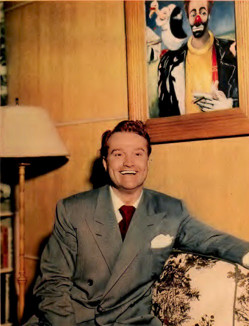
Red Skelton with Artwork, 1948. Photograph published in Radio Mirror, January 1948. Macfadden Publications. Public domain (copyright not renewed). Courtesy of Wikimedia Commons.
Last modified by
Admin
•8/1/2026 5:27:39 PM