This page is a draft and may contain incorrect information and/or experimental styling.
Wildfowler Decoy Company
Table of Contents
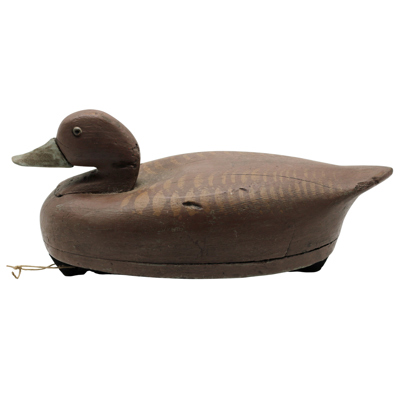
The Wildfowler Decoy Company was one of the most successful American manufacturers of wooden hunting decoys during the twentieth century. Founded in 1939, the company produced thousands of decoys for waterfowl hunters throughout the United States while maintaining a reputation for realistic carving, durable construction, and an unusually broad product line.
Unlike many regional decoy makers whose production was limited to local species or custom carving, Wildfowler operated as a commercial manufacturer capable of supplying sporting goods dealers, hunting clubs, guides, and individual sportsmen. The company also accepted special orders, allowing customers to obtain species or configurations beyond the standard catalog offerings.
Although ownership changed several times during its history, the Wildfowler name remained in continuous use, creating several distinct collecting eras that are recognized today.
Wildfowler was established in 1939 by Theodore "Ted" Mulliken in Old Saybrook, Connecticut. Mulliken's goal was to produce realistic yet affordable wooden hunting decoys that could withstand years of hard field use.
The business eventually passed through five different owners and operated from several locations during its lifetime. Each owner introduced subtle changes in construction techniques, paint patterns, production methods, and product offerings while preserving the established Wildfowler identity.
Despite these ownership changes, the company remained focused on practical hunting decoys rather than decorative carvings. Production continued for decades, making Wildfowler one of the longest-lived commercial wooden decoy manufacturers in the United States.
Collectors generally identify Wildfowler decoys by ownership period rather than simply by the company name.
Ted Mulliken Era (1939–1958)
The founding period established the company's reputation for durable hunting decoys and realistic paint schemes. Most collectors consider Old Saybrook production to represent the classic Wildfowler period.
Robert "Rab" Staniford Era (1958–1961)
Following a factory fire, production moved to Quogue, Long Island. Although this ownership period was relatively brief, Quogue-made decoys remain desirable because of their comparatively limited production.
Charles Birdsall Era (1961–1977)
Production relocated to Point Pleasant, New Jersey. Birdsall expanded the product line while continuing to manufacture practical hunting decoys. Many examples encountered today originate from this period.
Later Ownership
Two subsequent owners continued production under the Wildfowler name while adapting to changing markets. Decorative examples became increasingly common as demand for traditional wooden hunting decoys declined with the widespread adoption of plastic decoys.
Wildfowler continuously refined its manufacturing methods while attempting to balance realism, durability, and affordability.
General construction characteristics include:
* Machine-shaped bodies with hand finishing.
* Hardwood heads fitted to lighter body materials.
* Extensive use of lightweight wood to reduce carrying weight.
* Both solid-body and hollow-body construction depending upon production period and model.
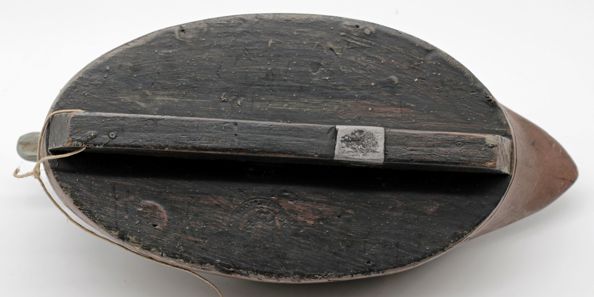
* Weighted wooden keels for stability.
* Glass eyes on many models.
* Durable oil or enamel finishes intended for field use rather than display.
As production evolved, manufacturing emphasized lighter-weight decoys that were easier for hunters to transport while retaining realistic proportions.
No single characteristic conclusively identifies every Wildfowler decoy. Collectors typically evaluate several features together.
Useful characteristics include:
* Bottom stamps or location markings.
* Keel style and attachment.
* Body construction.
* Head attachment method.
* Original paint style.
* Glass eye style.
* Overall proportions.
* Weight.
* Known production location.
Dating is generally most reliable when construction characteristics are considered alongside company ownership history.
Wildfowler decoys remain popular with both beginning and advanced collectors because they represent practical American hunting equipment rather than purely decorative carvings.
Collector interest generally favors:
* Original paint.
* Minimal restoration.
* Structural integrity.
* Uncommon species.
* Early production examples.
* Clear provenance.
Examples retaining their original hunting wear often command greater respect among collectors than heavily restored birds.
Wildfowler occupied an important position in the history of American sporting equipment. The company successfully bridged the gap between individually carved regional decoys and later mass-produced plastic hunting decoys.
Its willingness to produce numerous species, accept special orders, and continually improve manufacturing techniques allowed Wildfowler to remain relevant for decades while many competing wooden decoy manufacturers disappeared.
Today, Wildfowler decoys continue to be collected both as functional examples of twentieth-century sporting equipment and as representative examples of American commercial decoy manufacture.
* Mason Decoy Factory
* Herter's Decoys
* Stevens Decoys
* Carry-Lite Decoys
1. Richard Cowan and Richard LaFountain, *Wildfowler Decoys*, Decoy Magazine, five-part historical series. Primary historical reference.
http://decoymag.com/features/tidbits/wildfowler1.htm
2. Period Wildfowler catalogs and advertisements.
3. Collector observations from surviving examples in public and private collections.
Last modified by
Admin
•7/28/2026 7:31:23 PM